
Gum Disease Treatment – Forest, VA
Defend Your Gums from Severe Infections

Gum disease affects about half of all American adults, and severe oral infections can lead to serious consequences like changes in dental alignment, tooth loss, and dangerous secondary infections. Luckily, the team at Crossroads Family Dentistry is trained and equipped to address advanced cases of gum disease with effective periodontal treatments. Here’s a quick look at how gum disease affects the mouth and how it can be addressed at our office in Forest.
Why Choose Crossroads Family Dentistry for Gum Disease Treatment?
- Skilled and Compassionate Dental Team
- Restore the Health of Infected Gums
- Insurance Welcomed
What Is Gum Disease?

Gum disease begins as inflammation called gingivitis, which is characterized by redness, swelling, and bad breath. While gingivitis can usually be reversed with improved oral hygiene, it will develop into the much more serious stage called periodontitis if left untreated. Periodontitis causes irreversible damage like gum recession, jawbone erosion, and tooth loss, and it may lead to serious secondary infections like pneumonia or sepsis. Gums that have reached this stage of infection must be treated with regular periodontal treatments at our office for the damage to be managed. Gum disease is more prevalent among men, seniors, those living below the federal poverty level, smokers, and pregnant women.
Symptoms of Gum Disease
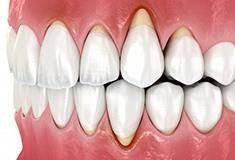
Gum disease can show itself through a variety of symptoms depending on how advanced the infection is. A patient with gingivitis may notice:
- Persistent bad breath
- Redness or swelling of the gums
- Bleeding during oral hygiene sessions
- Tenderness
Patients with periodontitis, on the other hand, may develop symptoms like:
- Painful chewing
- Loose teeth
- Dental sensitivity
- Changes in bite alignment
- Restorations no longer fitting properly
- Gum recession
- Jawbone erosion
- Tooth loss
How Do We Treat Gum Disease?

The process of treating gum disease always begins with a consultation at our office in Forest so one of our skilled dentists can assess the severity of the infection and determine an appropriate treatment. In many cases, we can address advanced oral infections with thorough scaling and root planing treatments.
Scaling & Root Planing
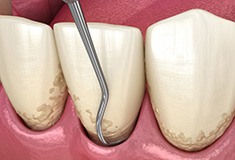
While gum disease can usually be reversed with improved oral hygiene if it is detected in its early stage called gingivitis, more advanced cases called periodontitis will require specialized treatments from a qualified oral health professional. At Crossroads Family Dentistry, we offer meticulous and thorough scaling and root planing treatments designed to eliminate infectious materials from your gums and encourage a smooth healing process. Here's a quick look at how the process works from our skilled dental team.
Do You Need Scaling & Root Planing?

You may need scaling and root planing, also called deep cleaning, if you experience symptoms such as:
- Pain while chewing
- Changes in dental alignment
- Bleeding when brushing or flossing
- Redness, inflammation, or swelling of the gums
- Persistent bad breath
- Visible plaque accumulation
- Gum recession
- A constant nasty taste in your mouth
While gingivitis, the first stage of gum disease, can usually be reversed with improved oral hygiene habits, periodontitis, the more advanced stage, will require professional treatments such as scaling and root planing.
The Process of Scaling & Root Planing

Scaling and root planing is a two-part process that typically requires two appointments. During the first, our dentist will meticulously remove accumulated plaque and tartar from the teeth, any exposed root structure, and the pockets of the gums. During the second stage of treatment, they will remove hardened bacterial deposits from inside the gums and smooth out the roots of the teeth to encourage them to reintegrate with the soft tissues. This will help ensure a smooth healing process and discourage reinfection.
Aftercare Tips for Scaling & Root Planing

The scaling and root planing process can be intensive, so you may need several weeks for your teeth and gums to fully recover. During this time, you can expect to experience some sensitivity and discomfort, but you can keep your healing process smooth and as pleasant as possible by adhering to the postoperative instructions we will provide. These will probably include:
- Rinse with warm saltwater to reduce irritation and loosen food debris. Make saltwater by mixing a quarter teaspoon of salt into eight ounces of water.
- Be careful when brushing and flossing. Be sure to use a soft-bristled toothbrush and clean your teeth with gentle, circular motions.
- Avoid foods and beverages that are hot, spicy, acidic, alcoholic, or sugary.
- Abstain from tobacco products.
- Stick to a soft diet for at least the first forty-eight hours after treatment.
- Take a break from intense physical activity for several days after the procedure.